
Muscogee County Civil Docket Searches
The official Muscogee Tyler Odyssey ePortal is the first stop for a public case. State or Superior matters both appear there. Smart Search pulls up case information. Search Hearings, in turn, looks for settings inside a date range. Posted calendar files live in the separate Civil-Domestic Docket Directories. They are sorted by court, judge, date, hearing type, and room or floor. Treat the directory as a companion to the case result. It is not a complete case register on its own.
Gather party names, the filing year, and the case number if you have one. Settle the likely court before you begin. The live portal can change its fields. So use the exact controls shown rather than an assumed name format. If the case is not online, call the correct clerk. You can also visit its counter, or submit a narrow written copy request.
- Choose the court from the type of case, not merely the amount in dispute.
- Use Smart Search with the narrowest known party or case identifier.
- Confirm the court, case style, filing date, judge, status, and current setting.
- Compare a hearing result with the appropriate Civil-Domestic Docket Directory.
- Request the actual complaint, order, judgment, or decree from the custodian when proof is needed.
Muscogee County Civil Dockets by Court
Subject matter drives civil routing in Muscogee County. Superior Court takes domestic relations, equity, title to land, and other major civil cases. State Court has broad civil jurisdiction, yet it does not hear title-to-real-property, domestic-relations, or equity cases. Claims generally up to $15,000, garnishments, and dispossessory matters go to Magistrate Court. Municipal Court lists limited civil suits, garnishments, writs of possession, dispossessory proceedings, bad-check matters, abandonment, distress warrants, and Rule Nisi work. Probate keeps estates and guardianships apart from the general civil docket.
| Court | Civil docket covers | Search route |
|---|---|---|
| Superior | Domestic, equity, land title, and major civil cases | Tyler portal and Superior Civil-Domestic directory |
| State | Civil cases outside excluded subjects | Tyler portal and State Civil-Domestic directory |
| Magistrate | Claims generally to $15,000, garnishment, dispossessory | Magistrate clerk or counter |
| Municipal | Listed limited civil and local proceedings | Municipal Clerk |
| Probate | Estates and guardianships | Probate office and its separate index |
A domestic or land-title case can land in Superior Court even when its dollar value seems small. Start with subject matter and you avoid a false no-result docket search.
Civil Dockets: What They Show
Think of a Muscogee County civil docket as the case's public event index. Where the fields are public, it identifies the style, court, assigned judge, filing date, and status. Motions, service entries, settings, orders, and disposition appear too. The Clerk's civil copy form lists its core lookup details. Plaintiff names, defendant names, case number, and year lead the list. One caution applies. The visible index does not guarantee that each filed image can be opened online.
| Case number | The court’s exact identifier and filing year. |
|---|---|
| Case style | The public plaintiff and defendant names used to identify the action. |
| Filings | Entries for complaints, answers, motions, service, and later papers. |
| Settings | Hearings, bench or jury sessions, mediation, and reset information. |
| Outcome | Dismissal, judgment, decree, or another final order when entered. |
A judgment entry only tells you the court acted. It does not reproduce the signed judgment. When the terms or certification matter, request the filed document itself.
Muscogee County Civil Docket Directory
Filter the Superior Civil-Domestic Docket Directory through its judge and calendar choices. Posted filenames can identify civil or domestic hearings, jury and bench trials, the date, the judge, the floor, and sometimes the attendance mode. A PDF that remains online may have been superseded. Compare it with Search Hearings, the case docket, and any later order. The judge or clerk can confirm a setting that appears inconsistent.
For State civil work, the official State Court officials directory supplies current public court context. Its page appears below.
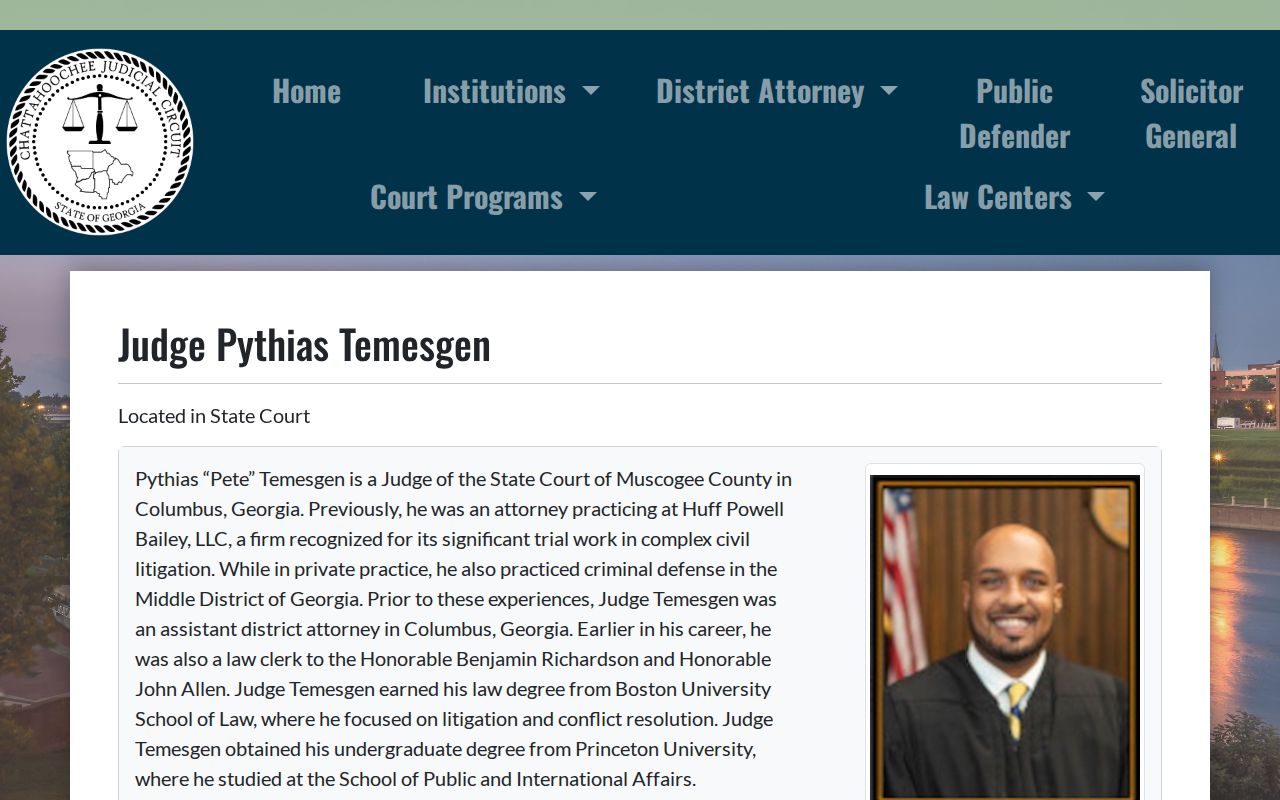
That page is a routing aid, not a civil docket. Public profiles can lag behind vacancies or assignments, so verify the active judge through the live case and court notices.
What Cases Fill the Civil Docket
Civil dockets in Muscogee County cover several distinct kinds of dispute. Superior civil and domestic files can involve divorce, custody, support, equity, and land title. State Court handles civil claims within its grant of jurisdiction. Small claims, garnishment, and possession matters sit in separate lower-court records. Probate is one holdout. Confidential juvenile dependency work is another. Neither shows up as an ordinary State or Superior civil result.
- Civil complaints, answers, motions, and judgments in State or Superior Court
- Divorce decrees, agreements, custody, and support orders in Superior Court
- Garnishments, dispossessory cases, and qualifying small civil claims in lower courts
- Temporary protective order proceedings and related filed orders
- Estate and guardianship matters in the separate Probate Court system
Why does the category matter? Because it tells you which clerk to ask, and Georgia gives Muscogee County no single statewide system where every lower-court civil docket can be searched by text in one place.
Muscogee County Civil Docket Copies
The civil and domestic copy form bridges a docket entry and the paper behind it. It asks for plaintiffs, defendants, and the case number if known. Year, requester contact, copy type, payment route, return method, and extra identifying information fill out the form. Document choices include service, answer, judgment, and complaint. Divorce decree, agreement, support orders and worksheets, name-change final order, and temporary protective order are options too. Name the exact document. That cuts delay and avoids a broad, unclear request.
Use the Muscogee clerk copy-request page for current submission channels. The clerk offers in-person, mail, and stated fax, email, digital, or card routes. Each applies where the copy type allows. The form warns that certified or exemplified documents have limits on electronic return. Mail work may take up to ten business days. A caller can also use the clerk's phone tree before sending the request.
Best request: Name the court, parties, year, case number, exact document, and whether the copy must be plain, certified, or exemplified.
Hearings on the Civil Docket
A civil setting on the Muscogee County court docket can take several forms. Motion hearings, bench trials, jury sessions, and temporary protective order matters all show up here. So do mediation dates and final hearings. Read each entry for the assigned judge, the court, the setting label, and any room or attendance note. One caution matters: a calendar entry is not itself an order. The court may later grant a continuance or reset. An older posted PDF can then linger even after the active date has changed.
Local practice adds a step that trips people up. The Muscogee County civil and domestic standing order requires mediation before many final hearings. It also requires specified financial affidavit or child-support worksheet material before a hearing or mediation. Exceptions apply. A final-hearing date can stay visible. Meanwhile, readiness, mediation, or a court-approved reset decides what actually happens. Check the docket for a later filing or order. Then confirm the live date with the clerk. The Muscogee County Court Schedule lays out the full setting workflow.
Muscogee County Civil Docket Boundary
Not every county record belongs to the civil docket. A recorded deed is not a civil case docket. Deeds, liens, plats, and related land records live in the Clerk's real-estate recording division. Separate recording and notification systems keep them apart. A lawsuit over title to land belongs in Superior Court. Yet the recorded instrument describing that property sits in the land-record collection, not the court file. Search the wrong system and a valid record can look missing.
The Clerk's real-estate recording and records page spells out that custody split. It also shows what each side of the office holds.
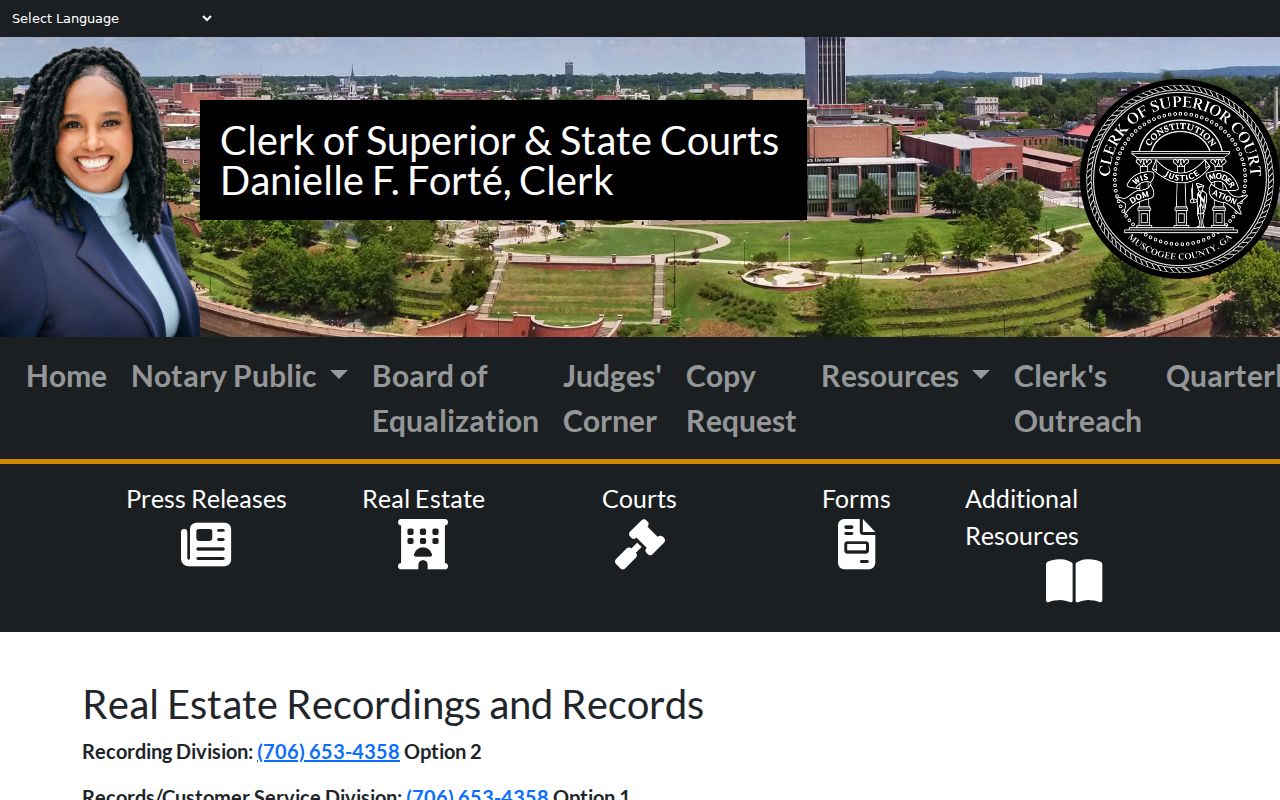
That record system is separate. Use the land records for the recorded instrument and the Muscogee County Superior civil docket for the court case about title or equity.
Muscogee County Civil Docket Access
Online tools are only one channel into Muscogee County civil dockets. State and Superior searchers get the most options. Smart Search works for case lookup. So do Search Hearings and the posted Civil-Domestic Docket Directories. Prefer a person? The Superior and State Clerk helps by phone. The counter works too, as do written copy requests sent by mail. The official copy page adds fax, email, digital, and card channels for eligible work. Magistrate, Municipal, and Probate matters go to their own clerks. No single Muscogee County civil docket search covers them all.
Georgia Courts E-Access is a statewide directory of local courts and approved access providers. It is not a statewide case register. It points you to courts, not to every filing. For an administrative public record outside the judicial file, a narrow Georgia Open Records Act request may fit. For pleadings and orders in a court case, follow the clerk's rules and copy process. One limit stands firm: the agency does not have to create a new compilation from several databases.
- Certified copy
- A reproduction carrying the clerk’s certification.
- Exemplified copy
- An enhanced certification for a specific legal use.
- TPO
- A temporary protective order case or calendar label.
- Reset
- A court-approved move of a setting to a later date.
Who Can See Civil Dockets
Access starts with Georgia Uniform Superior Court Rule 21. That rule sets the public-access baseline for Superior Court records. Law, procedure, or court order can still limit what you see. Rule 21.2 demands a supported finding before protected interests outweigh public access. Rule 21.6 covers personal identifiers. Confidential domestic, medical, financial, juvenile, or sealed material may be withheld. It may also be released only in redacted form.
A portal failure does not seal a case. The matter may sit in another court or predate the online index. It may carry a spelling variation or simply await indexing. Search the right venue first. Then ask its clerk whether a public docket, redacted copy, or filed order exists. If an office withholds a judicial file, request the rule or order controlling access. Do not chase the protected content elsewhere.
Public access framework:
Uniform Superior Court Rule 21 covers access, sealing standards, temporary restrictions, and protected identifiers.
Georgia Attorney General open-government guidance explains O.C.G.A. §§ 50-18-70 and 50-18-71 for agency records.
Judicial pleadings and orders should be requested through the clerk that maintains the original Muscogee County civil docket.