
Muscogee County Criminal Docket Searches
Begin with the official Muscogee Court Portal resource. It routes the public to the Tyler Odyssey ePortal. Smart Search handles case lookups there, and Search Hearings works off a date range. The Superior and State Criminal Docket Directories are different tools. They post calendars sorted by court, judge, date, setting, and courtroom. That makes them handy for a scheduled session. But they are no substitute for a name-based case register. Jail Search or Make Payments should never be treated as criminal docket results. Gather the defendant name, the likely court, and the filing year. Add a case number if you have one. The online result may come up empty. Then try the posted directory. You can also call the court or visit the clerk's counter. The Clerk of Superior and State Courts serves both of those court systems. Recorder's, Municipal, Juvenile, and the other lower courts each keep their own records.
- Identify whether the matter began in Recorder’s, Municipal, State, Superior, or Juvenile Court.
- Use Smart Search with the narrowest known official identifier, then confirm the court and filing year.
- Check Search Hearings and the correct Criminal Docket Directory for the latest public setting.
- Read the charge, judge, status, hearing, plea, and disposition fields without assuming a pending entry is a final result.
- Ask the proper clerk for a filed indictment, accusation, or certified disposition when the document itself is needed.
Muscogee County Criminal Docket Directories
Muscogee County splits its posted court dockets by court and branch. Superior Court and State Court each run separate calendars. The criminal side is its own set. In that set, a public Muscogee County criminal docket entry may show an arraignment or a pretrial setting. It may also list a non-jury or jury trial, docket call, or sentencing. Write down what each line carries. Note the court, the judge, the date and time, the room or floor, the setting type, and any case identifier the calendar shows. Calendars get replaced. The assigned court is still the best place to confirm a live setting.
The official Superior Criminal Docket Directory is the page that lays out these posted Superior Court calendars. Each branch is listed for the docket search.
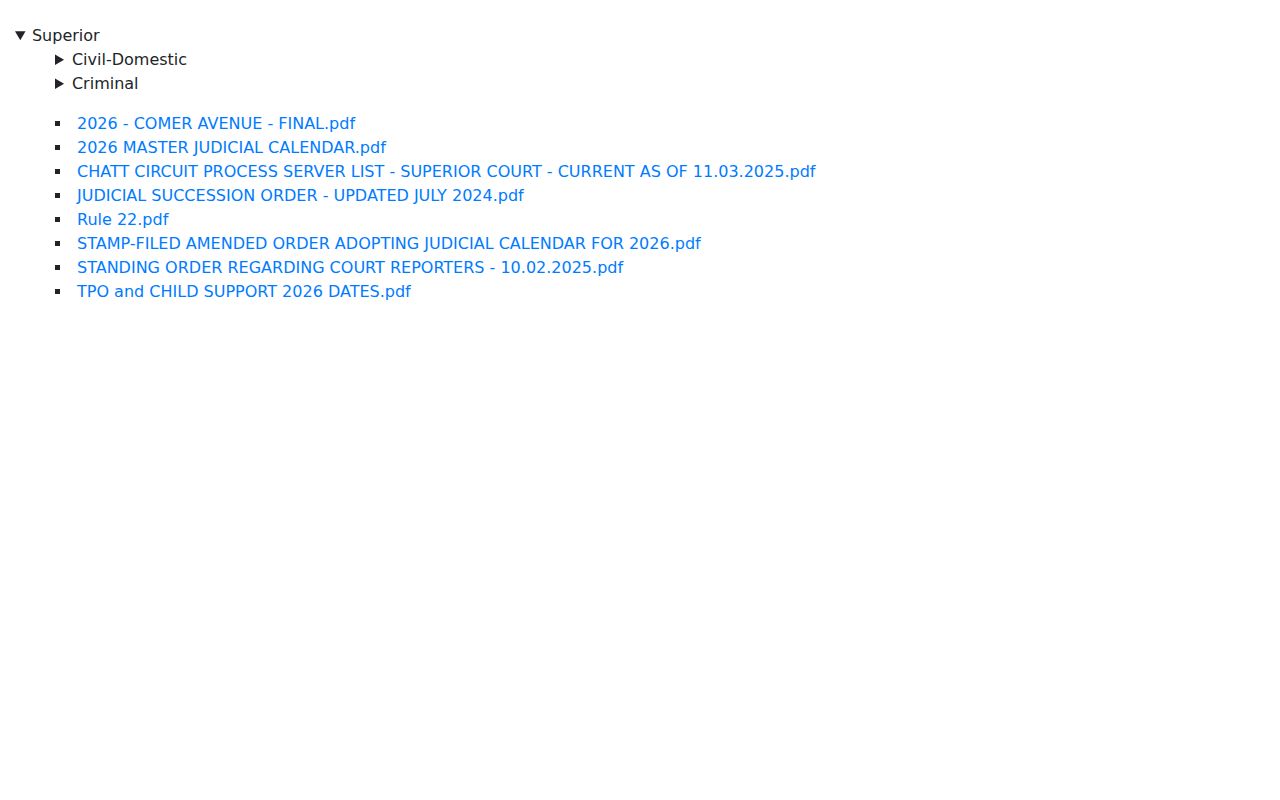
The screen helps you tell a calendar-file directory apart from a full case record. Find the session there, then confirm the matching case through Smart Search or the clerk.
Criminal Dockets: What They Show
Think of a Muscogee County criminal docket as a running index of public case events. The official criminal copy form points to the details that matter most in a lookup. Name, case number, year, and charge lead the list. The clerk may also need a date of birth to separate records. A public result can also show the court, judge, filing date, status, counsel, settings, plea, and disposition. Dynamic fields shift. Trust the labels the live portal actually displays.
| Case identifier | The official case number and filing year, recorded exactly as shown. |
|---|---|
| Charge | The accusation or offense listed, not proof that the allegation was sustained. |
| Setting | Date, time, judge, room or floor, and event type. |
| Plea or ruling | A public entry reflecting a filed plea, order, or judgment. |
| Disposition | The recorded result. Obtain a certified copy when proof is required. |
A docket line is a summary. It is not the accusation, the indictment, the evidence, a transcript, or a certified final disposition. For the documents behind those entries, use the broader Muscogee County Court Case Records route.
Muscogee County Criminal Docket Routes
Criminal work in Muscogee County splits by stage and seriousness. Recorder's Court runs initial appearances plus preliminary or probable-cause hearings for arrested people held in the Muscogee Jail. It may address bond and bind a matter over. Municipal Court can conduct committal work and take guilty pleas or sentencing in some state-law matters. Cases that need a jury can move upstream. State Court hears misdemeanors and criminal jury work within its jurisdiction. Superior Court holds the felony trials.
Local route: Initial appearance › probable-cause or commitment hearing › bind-over › State or Superior filing › arraignment › trial or plea › disposition.
The official Superior Court overview names its felony role.
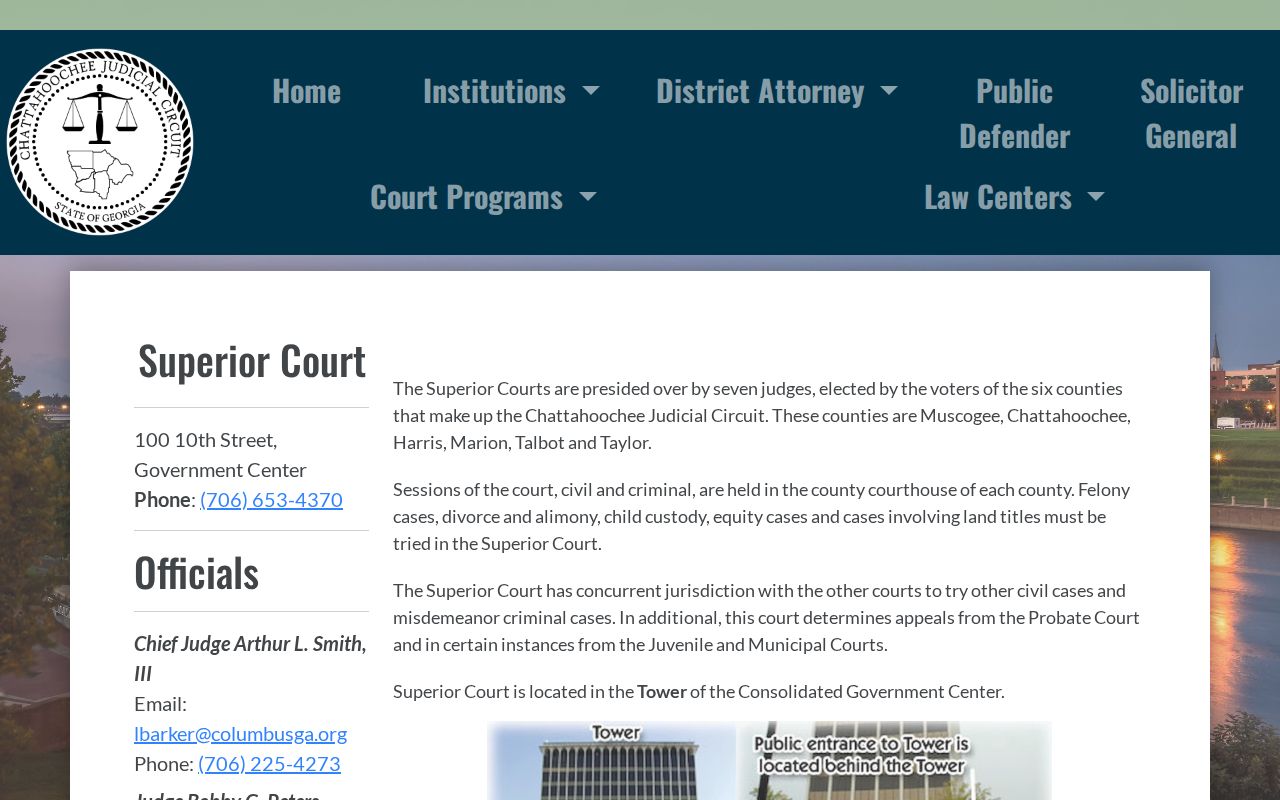
That split explains a common gap. A Recorder's setting may never reveal the later Superior docket number, so after a bind-over, search the receiving court.
Criminal Case Stages on the Docket
A Muscogee County criminal docket builds up as papers are filed and settings occur. An accusation or indictment opens the formal charging record in the trial court. Arraignment records the charge and plea stage. Pretrial settings may cover motions, readiness, or scheduling. Discovery disputes show up there as well. From there, a plea or trial can lead to judgment. Sentencing and the final disposition close out the main trial-level sequence. Later motions or an appeal can add entries.
Docket flow: Filing › Arraignment › Pretrial › Plea or Trial › Disposition › Sentencing.
- ARRN
- Local calendar shorthand for arraignment.
- CR Non-Jury
- A criminal setting not listed as a jury trial.
- Disposition
- The recorded outcome, which may differ from the charge first filed.
- Bind-over
- The step that sends a matter from a lower-court stage to the trial court.
Labels mark procedural events only. They are not findings, unless the docket records the judgment or disposition itself.
Muscogee County Criminal Docket Settings
State Court handles the misdemeanor criminal docket. Jury matters sit there too. Muscogee County gives it a posted directory of its own, apart from Superior Court. Yet one principal clerk serves both courts. That split makes the court name a search field worth checking. Search only the felony directory and you can miss a State Court misdemeanor hearing. The directory also keeps current and archived judge options. A judge named in an old court record does not settle who holds the assignment today.
The State Court jurisdiction page states the official boundary of what State Court hears. It comes from the Columbus courts site.
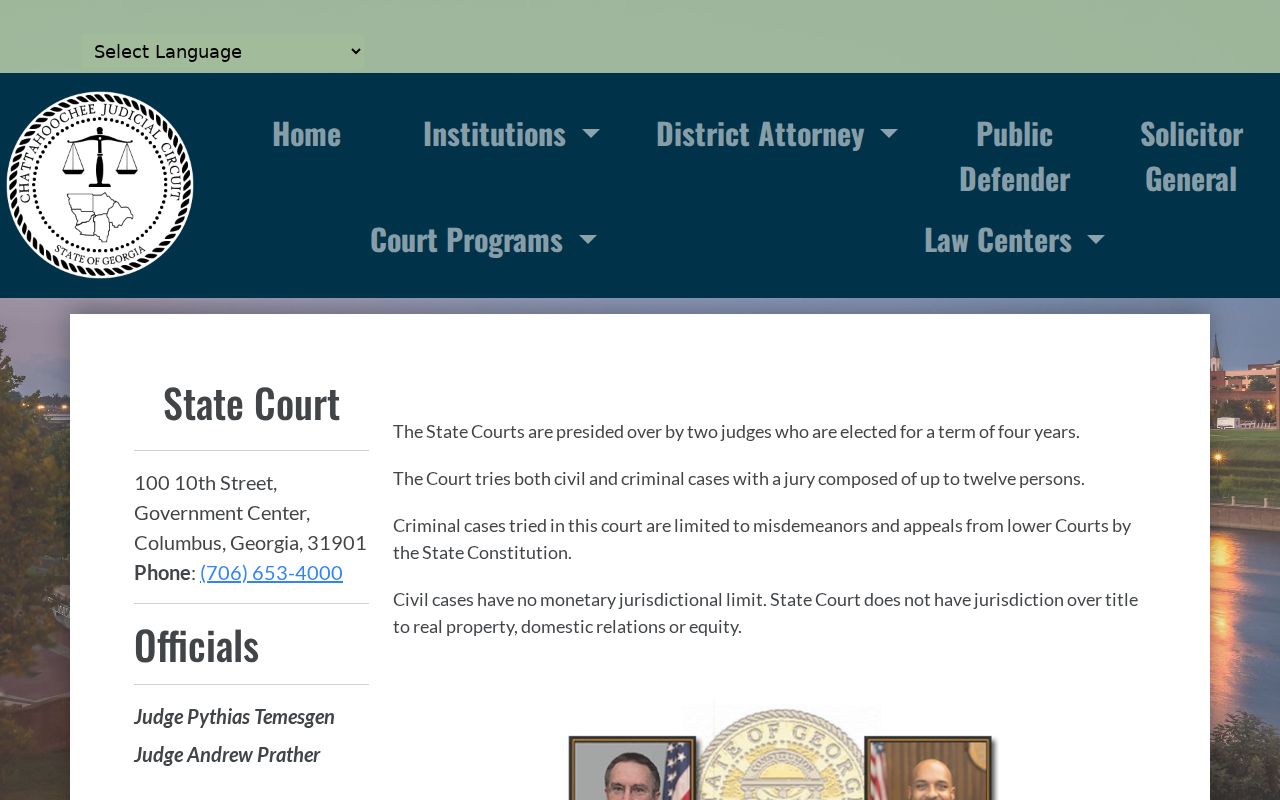
Use the jurisdiction statement to route the matter, then the docket tools for a setting. Court profiles and docket entries answer different questions.
Muscogee County Criminal Docket Courts
Superior Court holds felony trials. State Court takes misdemeanors and other assigned criminal work. Recorder's Court handles Columbus traffic matters, initial appearances, and preliminary or probable-cause proceedings. Municipal Court performs committal functions. It also hears certain local or state-law matters. Juvenile Court handles delinquency cases under a confidential framework. Each office keeps the docket for its own court's work.
| Court | Criminal role | First route |
|---|---|---|
| Superior | Felony trials | Smart Search and Superior directory |
| State | Misdemeanors | Smart Search and State directory |
| Recorder’s | Initial, preliminary, and traffic matters | Recorder’s clerk or counter |
| Municipal | Committal and certain local matters | Municipal Clerk |
| Juvenile | Confidential delinquency matters | Juvenile Clerk |
Muscogee County criminal dockets live in separate systems, so no statewide text search pulls them together. Georgia E-Access works as a directory of providers rather than one combined lower-court index.
Muscogee County Criminal Docket Directory
Smart Search does not always settle a date question. When it falls short, the State Criminal Docket Directory helps. It offers a second calendar route for Muscogee County. Pick State, choose Criminal, and work with the judge or calendar options shown. Archived labels stay visible in the system. So hold the posted file against current official notices. Two State Court vacancies were reported in an official August 2026 Judicial Nominating Commission notice. That makes older profile and calendar labels suspect. The county's State Docket Directory is the source for the interface that follows.
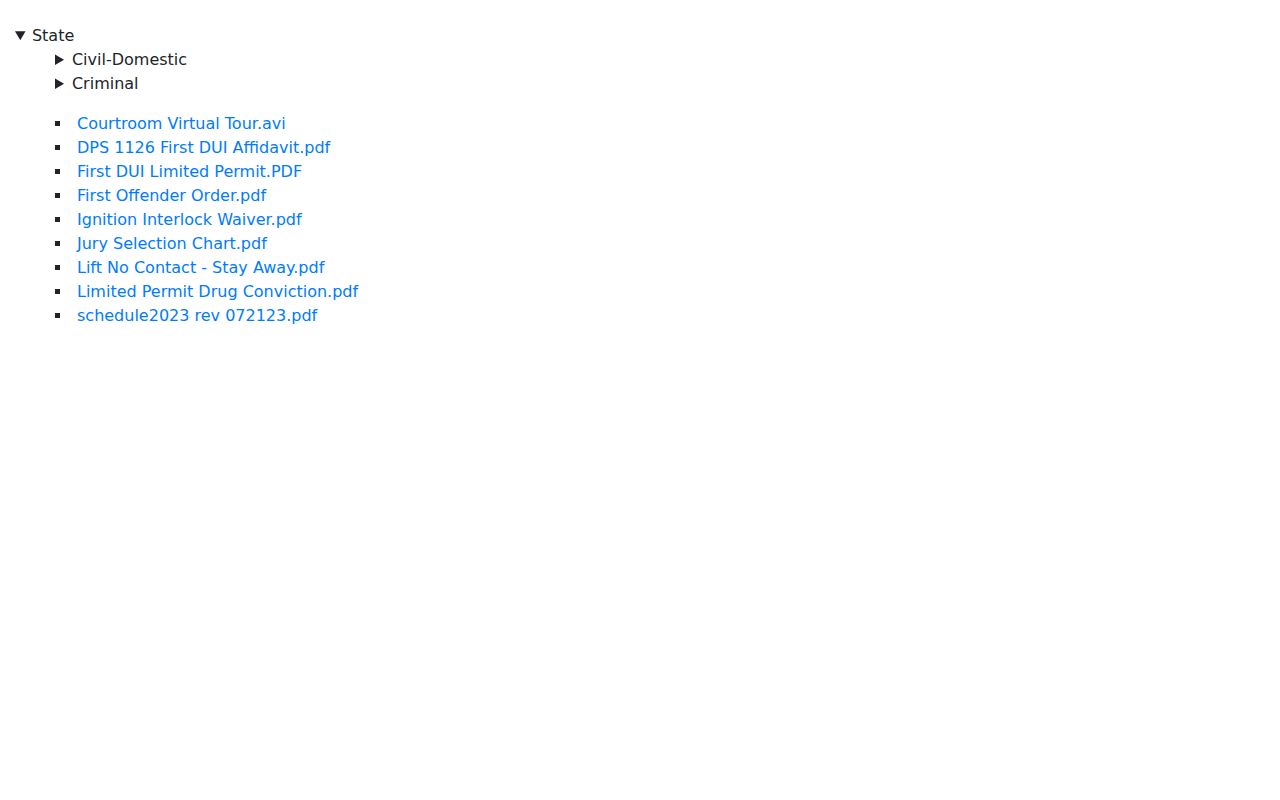
Treat the view as calendar context only. It proves no outcome, so confirm any changed assignment or date with the clerk.
Muscogee County Criminal Docket Copies
Sometimes a portal entry is not enough. The Clerk of Superior and State Courts takes criminal copy requests on an official form. List the defendant name, case number if available, year, charge, and date of birth, plus the item you want. Options run from an accusation or indictment to a final disposition or another named document. Certified or restricted copies cannot go out by fax or email. Mail requests may take up to ten business days.
Access is not online only. You can visit the clerk's public counter, dial the proper phone-tree extension, mail the criminal form, or use the copy page's fax, email, digital, and card channels when the record type permits them. Recorder's matters belong to Recorder's Court at (706) 653-4256. Georgia E-Access can point you to a provider. It still cannot replace the local custodian of the court record.
Need proof? Request the filed or certified document. A saved image of a Muscogee criminal docket is not a certified final disposition.
Access Rules for Criminal Dockets
Georgia Uniform Superior Court Rule 21 starts from open access to court records. It then permits limits set by law, procedure, or court order. Rule 21.2 makes a court weigh privacy or another protected interest against public interest. Rule 21.6 shields specified personal identifiers. So juvenile cases, sealed orders, confidential material, and restricted criminal-history information may be absent. They may also be limited in the public portal.
Record restriction does not destroy every local court file. A missing result can mean something simple. The case sits in Recorder's, Municipal, Juvenile, or another system outside the Tyler index. Ask the custodian a direct question. Does a public redacted record, a general calendar entry, or a final disposition exist? That is often the fastest answer to a blank docket search.
Georgia access rules:
Uniform Superior Court Rule 21 governs public court records, sealing, temporary limits, and protected identifiers.
Georgia record-restriction guidance explains why restricted history is not erased.
Muscogee Juvenile Court routes confidential questions to its clerk.