
Columbus Court Docket Searches
Columbus Municipal Court is the first stop for local, limited matters. Its Municipal Clerk points people to an eCourt portal. But the public notice currently says no docket dates are posted until further notice. Don't read a blank calendar as proof the case has no date. When the online route comes up empty, call the Municipal Clerk at (706) 653-4378. Try the other published number at (706) 653-4790, or ask at the Government Center counter in person.
Recorder's Court is the place for traffic and preliminary work. A citation-number payment route, a fine calculator, and the courtroom-door case list all work there. The clerk window at 702 10th Street works too. For State and Superior matters, turn instead to the Muscogee Tyler Odyssey ePortal. Search Hearings and the posted Docket Directories serve those cases as well.
- Identify Municipal, Recorder’s, State, Superior, Magistrate, Probate, or Juvenile as the likely court.
- Use the court’s own lookup with the exact citation, case number, party name, and year available.
- Record the court, status, judge, event type, date, time, and courtroom shown.
- If no city result appears, check the county portal for a transferred or higher-level case.
- Confirm the live setting with the clerk before relying on an old calendar.
Columbus Court Records in Context
Columbus is the only incorporated place inside Muscogee County. The 2020 Census counted 206,922 residents. Official Georgia planning material treats the city and county as one consolidated Columbus-Muscogee government. That structure makes the local court map unusual. If a Columbus docket search comes up empty, there is no ring of neighboring municipal courts to try next. The usual fallback is another Columbus-based court office or the county-level State and Superior system.
These numbers explain the local role of Columbus court records. They serve as the front door to city and county proceedings, yet the municipal court is not a countywide court of general jurisdiction.
Inside the Columbus Municipal Court
Columbus Municipal Court sits at 100 10th Street, on the Government Center's eighth floor. It handles committal work, takes certain state-law misdemeanor pleas and sentencing, and passes jury cases along to State or Superior Court. Listed civil work includes garnishments, writs of possession, dispossessory cases, bad-check matters, abandonment, distress warrants, and Rule Nisi proceedings within its authority. No stable current judge name appears in the official sources, so let the live court record and the clerk control on that point.
Keep the clerk split straight, too. Municipal records live with the Municipal Clerk, not the Superior and State Clerk. The Tyler county portal does not promise a complete Municipal index. So when the city eCourt calendar shows no date, use the published Municipal phone or the eighth-floor counter rather than guessing the case ended.
Columbus Court Record Geography
Most of Columbus court life happens inside the Government Center. The offices just sit on different floors. Municipal and Magistrate share the eighth-floor Tower area. The Law Library sits up there too. Head down two flights for the Superior and State Clerk on the second floor, six for Probate, or to the first-floor East Wing for Juvenile. Recorder's Court stands apart. Its traffic operation runs from 702 10th Street, with an annex at 1000 5th Avenue.
Need research help instead of a stamped copy? The Muscogee County Law Library opens its doors to the public. It offers terminals, forms, Wi-Fi, and free Westlaw access for digging into Columbus court records and the law behind them.
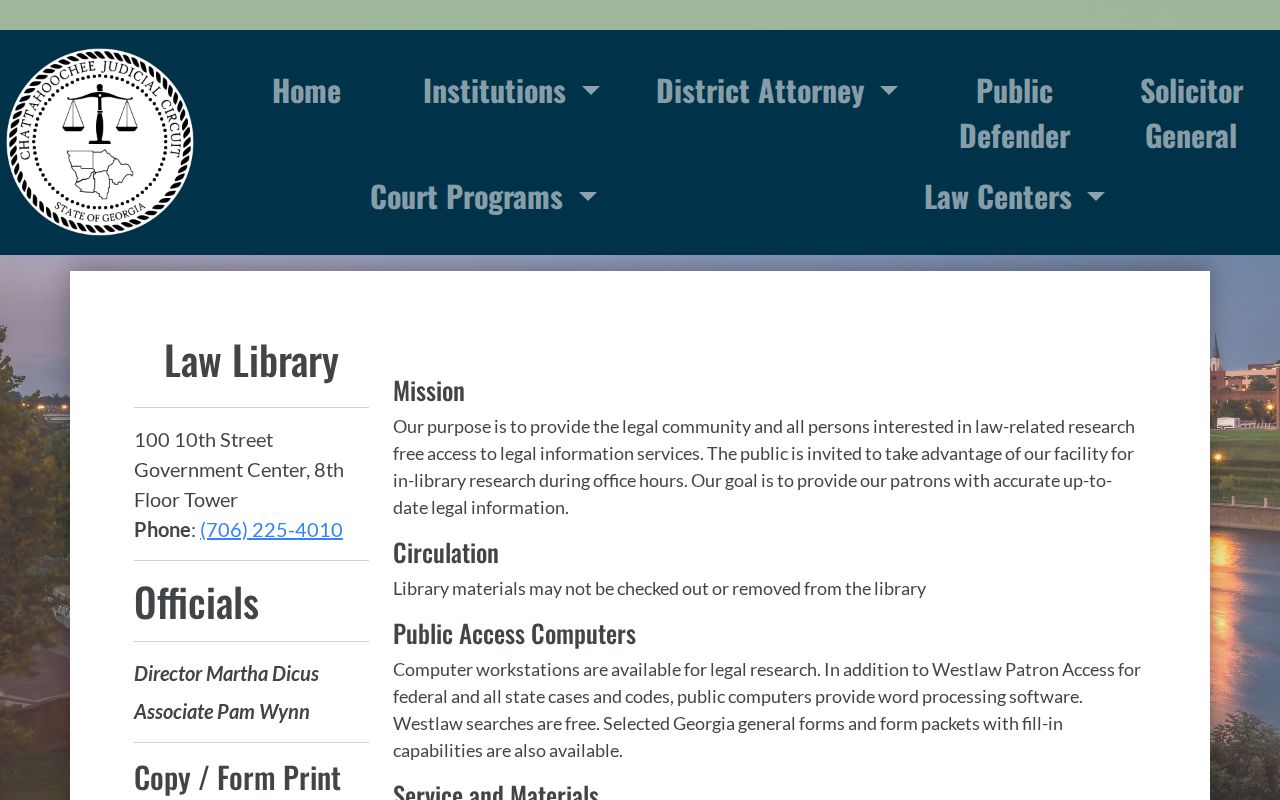
Treat the library as a research stop, not a records counter. Its staff and tools can point you to the right forms and statutes, but only the court clerk hands out official copies of a Columbus case file.
Finding Columbus Court Dates
A Columbus hearing date can surface in several places. A case-level Tyler result is one. So are the Search Hearings tool, a State or Superior Docket Directory entry, the printed list taped to the courtroom door, or a confirmation straight from the clerk. Each serves a different purpose. Know what the Docket Directory actually is: posted calendar files, not a full register of every case on the docket. When a case does not show up where you expected, Recorder's Court tells visitors to check the courtroom-door list and the clerk window. Municipal Court gives a direct clerk fallback for now. Its calendar notice states plainly that no hearing dates are posted online.
| Date | The current scheduled day, checked against later resets or orders. |
|---|---|
| Time | The session or individual time shown by the responsible Columbus court. |
| Courtroom | The room, floor, or Recorder’s location assigned to the matter. |
| Judge | The current judicial assignment, not merely a name in an archived list. |
| Setting type | Arraignment, preliminary hearing, bench trial, jury session, review, or another stated event. |
If sources conflict, call the clerk, because a later order or court-approved reset beats an older downloaded calendar every time.
Columbus Juvenile Court Records
Juvenile Court in Columbus hears dependency, delinquency, CHINS, and juvenile traffic cases. None of that shows up in a normal public Columbus docket search. There is a reason why. The court treats specific juvenile case information as confidential. So the records simply do not sit in the databases everyone else uses. That rule comes from the court itself, not from any broken portal or missing link. If you are allowed to ask about a case, go straight to the Juvenile Clerk in the first-floor East Wing office. Skip hunting through public court records online. The Columbus Juvenile Court contact page posts the confidentiality warning and points you to the clerk.
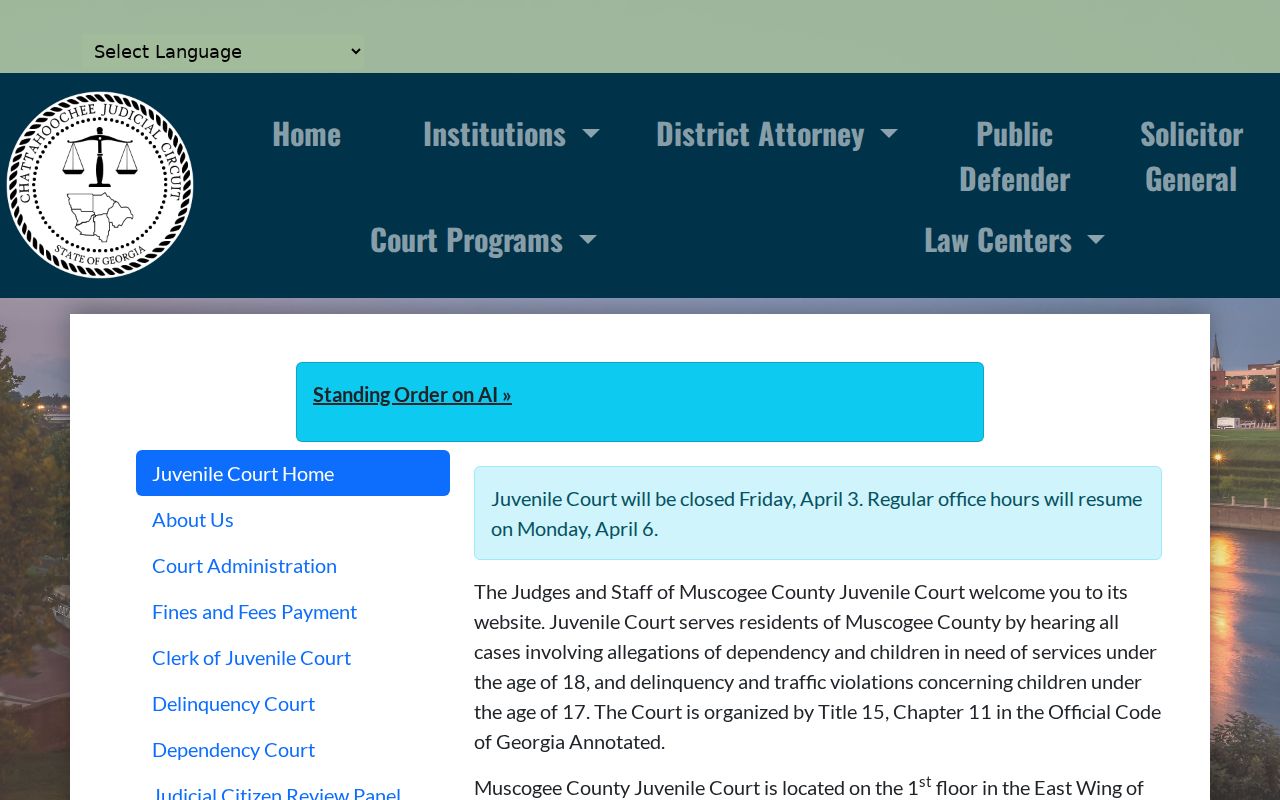
The listed contacts tell an authorized person where to take a juvenile question. They do not unlock confidential Columbus court records for general online review.
Columbus Traffic Ticket Lookups
Citations from Columbus Police, CSU, Georgia State Patrol, or DOT can often be paid through the Tyler Make Payments route. You just need the citation number. Recorder's fine calculator goes further. You pick the violation and enter its code. Add speed and zone details when they apply, and get a cost estimate. Treat that figure as an estimate only, not a court outcome. When a citation will not come up, call Recorder's Court at (706) 653-4256. Or reach the agency that wrote the ticket.
Deadlines differ between the two Columbus courts. Recorder's wants online payment completed before 8:00 a.m. on the day before court. Municipal Court applies a 72-hour cutoff instead; miss it and you must appear. Some violations require an appearance no matter what. Always follow the venue printed on your own ticket. Never apply one court's rule to both. A bench trial stays in Recorder's, while a jury demand can push the case up to State or Superior Court. For citation detail countywide, see Muscogee County Traffic Court.
Columbus Dependency Record Limits
Dependency cases deal with a child's care and safety. The Juvenile Court keeps them confidential. A public docket portal may show nothing at all. It may show far less than a general civil docket would. Family members and other authorized people should go through the Juvenile Clerk's contact process. Be prepared to prove your right to the information. A general court calendar never overrides that restriction.
The official Columbus juvenile dependency court page explains the local proceeding. It points date questions to the clerk.
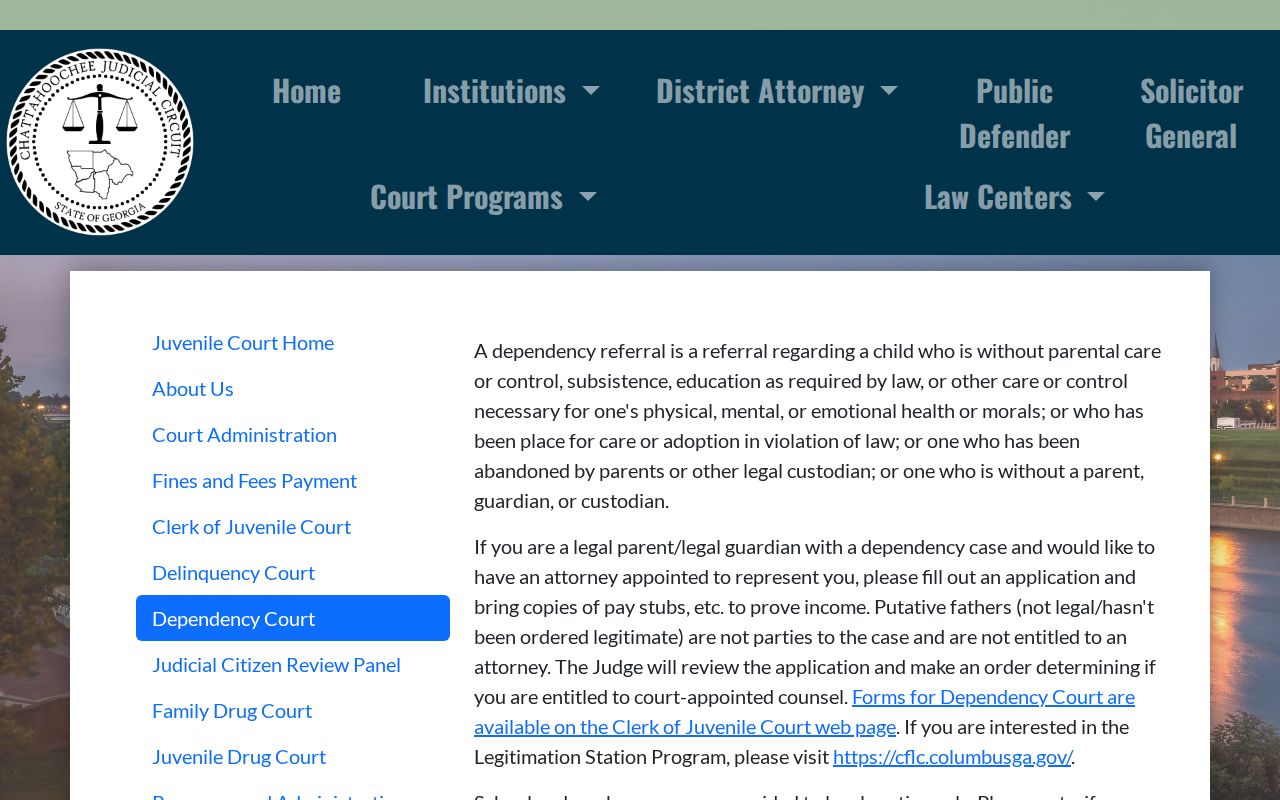
The distinction matters in Columbus. A confidential docket travels through the clerk, while a public State or Superior matter sits in Tyler.
How Columbus Cases Reach the County
Columbus cases do not always stay put. Recorder's Court may hold an initial appearance. It can also run a probable-cause hearing. Either step can bind a serious criminal matter over to a higher court. Municipal Court can transfer a case when a jury is demanded. State Court then takes misdemeanors. It also handles the civil work within its authority. Superior Court handles felonies, domestic relations, equity, land title, and major civil matters. Whichever court receives the case keeps the docket from that point forward.
Docket flow: Columbus Municipal or Recorder’s Court › Muscogee County State or Superior Court › Georgia appellate courts when authorized.
Keep your starting papers close. Note the original citation or case number. Add the court name and any transfer or bind-over entry. Then search the Muscogee Tyler portal with the matching Docket Directory. The Muscogee County Court Docket covers county-level routing. A Columbus search should stay anchored to the city venue first.
Columbus Probate Court Records
Probate Court keeps its own world of records. The files include wills, estates, guardianships, commitments, marriage licenses, and weapons-carry license work. Its Tyler index reads more like a catalog than a full case file. The office's own disclaimer suggests trying spelling variations. It also cautions that an index result never substitutes for the original document. For a Columbus estate or guardianship search, use the Probate route and its clerk. Skip Municipal, Recorder's, or the general criminal calendar.
The official Muscogee Probate Court page lists the office and staff contacts for Columbus residents.
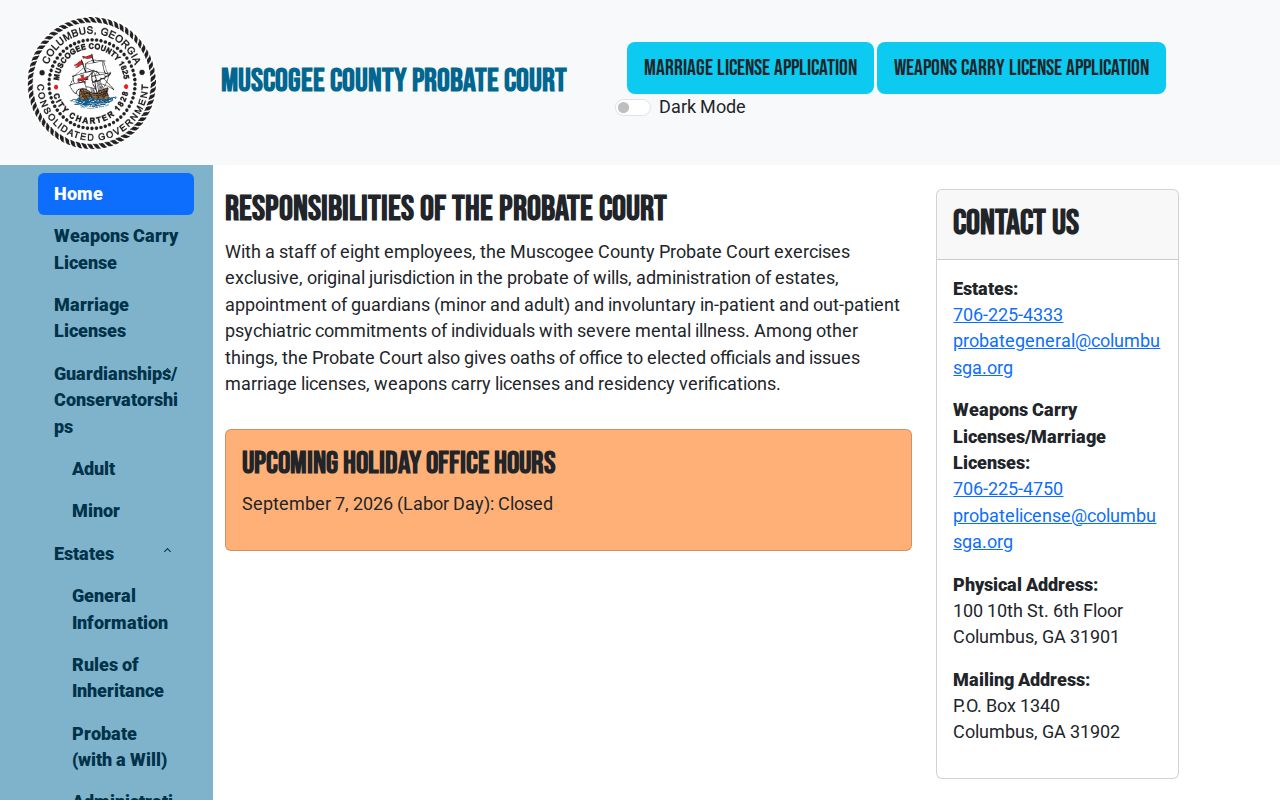
Probate is its own record keeper in Columbus. An index can locate an application or estate, yet the Probate Clerk holds the source record itself.
Who Can See Columbus Court Records
Georgia law, court rules, and confidentiality orders shape who sees Columbus court records. Uniform Superior Court Rule 21 sets the public-access baseline for Superior records. Sealing and redaction remain available when the legal standard is met. Protected identifiers have no place in public filings. Juvenile material and sealed cases may be missing. The same limits apply to confidential financial, medical, or domestic information.
Want a public Municipal or Recorder's copy? Ask that court's clerk directly. For State or Superior documents, gather the parties, court, year, and case number. Note the document type and whether you need a plain, certified, or exemplified copy. The county clerk takes requests at the counter. It also works by phone, by mail, and through its stated digital channels. Georgia E-Access is only a provider directory, not one combined Columbus database.
Access rules:
Uniform Superior Court Rule 21 governs public access, sealing, and protected identifiers in Superior Court records.
Georgia Open Records Act guidance applies to agency records, while judicial case files follow the court clerk’s access process.
Ask the originating Columbus court for a public redacted copy when a full filing cannot be released.
Columbus Accountability Court Records
Columbus anchors the local Muscogee accountability programs. The tracks include Adult Drug, Veterans Treatment, and Mental Health Court. Treatment and supervision come with eligibility. These programs still do not open a free-standing public portal, so the underlying State or Superior docket still governs. Calendar labels like MHC or PAC can signal a program setting. Confirm what those labels mean live with the assigned court.
The official Muscogee Accountability Court Program page lays out the local structure.
The program page clarifies a specialty setting on a Columbus docket. Official entries and copies still come from the clerk and the assigned court.
Columbus Court Record Route Check
Write down the Columbus venue before opening any portal. That single step makes a Columbus search far easier. Match a citation to Recorder's or Municipal Court. Match a felony or major civil case to Superior Court, and a misdemeanor or qualifying civil case to State Court. Probate and Juvenile stay separate. Routing first avoids a false no-result search.
Enter the Columbus case number exactly as written. Keep the court name, filing year, setting date, and document type with your request. If a portal fails, call the Columbus clerk, come to the counter, or mail a narrow request to the office holding the file. Before relying on any Columbus date, compare the live setting against a later reset or order.
- Columbus Municipal records: use the Columbus Municipal Clerk and city eCourt route.
- Columbus Recorder records: use the Columbus citation tools, clerk window, and courtroom list.
- Columbus State records: use the Columbus Tyler portal, State directory, and Superior/State Clerk.
- Columbus Superior records: use the Columbus Tyler portal, Superior directory, and Superior/State Clerk.
- Columbus Probate records: use the Columbus Probate index and Probate Clerk.
- Columbus Juvenile records: use the Columbus Juvenile Clerk within confidentiality rules.
Missing Columbus Court Records
When a Muscogee County docket search comes up empty, treat it as a clue rather than a verdict.
No hit does not mean no Columbus court record exists.
Check the court name, the party spelling, the case year, any transfer, and the public-access limit with the right clerk before concluding anything is missing.